
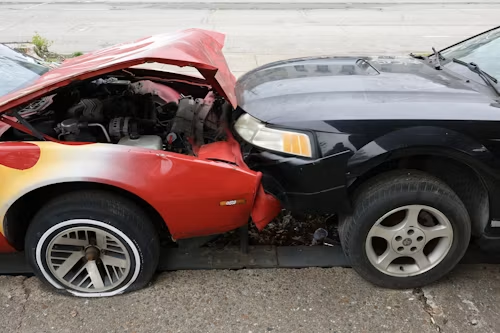
Securing full compensation after a car accident depends entirely on the strength and documentation of your supporting evidence. Insurance adjusters focus on minimizing payouts, relying on gaps in your record to dispute fault or downplay injuries. Collecting clear, verifiable documentation from the scene and during medical recovery establishes liability and forces insurance companies to offer fair settlements. Systematically gathering objective proof protects your financial rights, covers medical expenses, and replaces lost wages after a collision. Hiring experienced car accident attorneys in Houston after a crash ensures you have a dedicated legal team fighting for fair compensation while you focus on recovery.
On-Scene Visual Documentation and Physical Proof
Capturing immediate visual evidence at the crash site prevents insurance companies from disputing how the collision occurred. Physical evidence disappears quickly as vehicles are towed, debris is cleared, and weather alters road conditions. Taking high-resolution photographs and video footage before leaving the scene creates an undisputed record of the event.
Focusing on specific visual details helps accident reconstruction experts verify your account of the crash. Photograph all vehicle damage from multiple angles, skid marks, broken glass, traffic signals, and weather conditions. Documenting visible physical injuries immediately after the crash establishes a direct link between the impact and your physical harm.
Official Police Reports and Independent Eyewitness Testimony
Obtaining a detailed police report provides an authoritative foundation for proving fault in a personal injury claim. Responding law enforcement officers evaluate the crash site, interview drivers, and document traffic violations objectively. An officer’s official narrative, citations issued, and initial fault determination carry immense weight during insurance settlement negotiations.
Securing contact details and statements from unbiased eyewitnesses prevents the opposing driver from changing their story later. Passengers and passing motorists offer neutral perspectives on speed, lane changes, and traffic light status. Written or recorded eyewitness testimonies corroborate your account, making it extremely difficult for adjusters to deny responsibility.
Comprehensive Medical Records and Proof of Financial Loss
Maintaining detailed medical documentation links your injuries directly to the auto accident while demonstrating the severity of your pain. Seeking immediate medical evaluation creates an unbroken chain of treatment records that prevents insurance companies from claiming your injuries were pre-existing. Retaining hospital discharge paperwork, diagnostic scans, physician notes, and physical therapy logs proves the ongoing physical impact of the crash.
Tracking all financial losses establishes the true monetary value of your personal injury claim. Keep thorough records of hospital bills, prescription costs, property damage repair estimates, and out-of-pocket travel expenses for treatment. Requesting a lost wage verification statement from your employer documents missed workdays and lost income, ensuring full reimbursement for your financial disruption.
Protecting Your Rights During Insurance Adjuster Interactions
Handling communications with insurance adjusters carefully prevents your evidence from being undermined or misrepresented. Adjusters often request recorded statements early in the process, using leading questions to trick injured drivers into admitting partial fault or minimizing their pain. Refusing to give recorded statements until you review your evidence protects your claim integrity.
Organizing your medical bills, repair estimates, and police reports into a clear demand packet gives you the leverage needed during settlement negotiations. Presenting a well-documented case shows the insurance carrier that you are prepared to pursue legal action if they fail to offer fair compensation. Methodical preparation forces adjusters to treat your claim seriously from day one.
Conclusion
Building a strong car accident claim requires gathering objective visual proof, official police records, and complete medical documentation. Taking immediate action at the crash scene and following up with thorough medical care establishes an undisputed record of liability and financial harm. Avoiding common pitfalls like giving recorded statements protects your legal rights while maximizing your ultimate financial recovery. Methodically collecting high-quality evidence secures the financial resources you need to rebuild your life after a serious vehicle collision.

